
The Real Cost of Elite Mobility: Inside the 2026 Most Expensive Cars in the World
Who hasn’t stood still for a second, transfixed by the low growl of an exotic machine tearing down the highway? In my ten years advising high-net-worth clients on alternative luxury assets, I’ve seen attitudes toward elite hypercars shift dramatically. They are no longer viewed merely as playthings for the ultra-wealthy. Today, elite vehicles function as tangible assets, portfolio diversifiers, and rolling sculptures.
Back in 2018, the total combined value of the top ten most expensive cars in the world hovered around $28.5 million. By 2022, that figure exploded to $114.6 million. Entering 2026, bespoke coachbuilding and limited-run hypercars have shattered previous pricing ceilings entirely. While everyday consumers worry about rising mortgage rates, home loans, and car insurance premiums, collectors are deploying capital into multi-million dollar assets that frequently outpace traditional equity markets.
Let’s pull back the curtain on the engineering marvels dominating the automotive landscape in 2026, and more importantly, examine how high-end vehicle acquisition intersects with serious wealth management.
The Top 10 Most Expensive Cars in 2026
Rolls-Royce Boat Tail: $28 million
Bugatti La Voiture Noire: $18.7 million
Pagani Zonda HP Barchetta: $17.5 million
Rolls-Royce Sweptail: $13 million
Bugatti Centodieci: $9.5 million
Lamborghini Veneno: $8.5 million
Maybach Exelero: $8 million
Bugatti Divo: $6 million
Koenigsegg CCXR Trevita: $4.8 million
Aspark Owl: $3.5 million
A Deeper Dive Into Automotive Artistry
Rolls-Royce Boat Tail ($28 million)
Sitting firmly at the apex of bespoke manufacturing, the Rolls-Royce Boat Tail represents the ultimate expression of coachbuilding. Powered by a twin-turbo 6.75-liter V12 pushing 563 horsepower, this 18.7-foot convertible is essentially a rolling maritime yacht. Only three were ever commissioned, making its pricing less about standard automotive valuation and more about bespoke art curation.
Bugatti La Voiture Noire ($18.7 million)
Paying homage to the legendary Type 57 SC Atlantic, this French hypercar marries extreme aerodynamics with an 8.0-liter, 16-cylinder hand-assembled engine yielding 1,500 horsepower. In my experience dealing with rare asset acquisitions, single-unit editions like this rarely drop in secondary market valuation.
Pagani Zonda HP Barchetta ($17.5 million)
Horacio Pagani’s personal birthday gift to himself remains an elusive beast. Its open-top roadster configuration and ultra-low production run cement its status as a cornerstone of any serious multi-million-dollar garage.
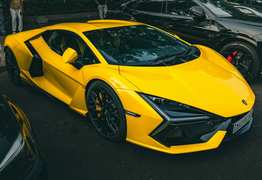
Rolls-Royce Sweptail ($13 million)
Commissioned by a super-yacht and aircraft specialist, the Sweptail is the automotive equivalent of haute couture. Beneath its dramatic panoramic glass roof lies a potent V12 engine capable of effortless, whisper-quiet cruising.
Bugatti Centodieci ($9.5 million)
A modern interpretation of the iconic EB110, the Centodieci borrows the Chiron’s architectural foundations while cranking output to a staggering 1,600 horsepower from its W16 engine.
Lamborghini Veneno ($8.5 million)
Drawing heavy inspiration from aerospace design, the Veneno uses a 6.5-liter V12 to slice through the air with cosmic geometry. With only nine units globally, its pricing resilience is extraordinary.
Maybach Exelero ($8 million)
Originally engineered as a high-speed testbed for tire manufacturer Fulda, this 700-horsepower coupe remains a heavyweight champion of unique corporate-commissioned history.
Bugatti Divo ($6 million)
Lighter and more agile than its stablemate the Chiron, the Divo is track-focused luxury. All 40 allocation slots were snapped up immediately by existing Bugatti collectors.
Koenigsegg CCXR Trevita ($4.8 million)
Famed for its proprietary diamond-weave carbon fiber bodywork that sparkles like millions of tiny diamonds under sunlight, this Swedish marvel proves that weight reduction and extreme speed go hand in hand.
Aspark Owl ($3.5 million)
Representing the electric revolution, this Japanese hyper-EV features four electric motors delivering a neck-snapping 0-60 mph time of just 1.69 seconds. It proves that sustainability and extreme performance can coexist.
What This Means for You
You might be wondering how multi-million-dollar hypercars relate to your personal financial strategy. Unless you manage a family office or sit comfortably within the ultra-high-net-worth bracket, you aren’t writing a check for a Bugatti Centodieci today. However, the economic principles governing these elite assets mirror those of high-end real estate investment, luxury asset diversification, and capital allocation.
When evaluating major financial commitments—whether securing competitive mortgage rates, refinancing existing commercial real estate, or purchasing primary residences—liquidity and asset appreciation are paramount. Ultra-luxury cars are illiquid assets. They require specialized climate-controlled storage, immense maintenance outlays, and expensive insurance riders.
Should You Buy, Wait, or Invest?
If you are evaluating luxury car ownership as an investment, proceed with extreme caution.
Buy: Only purchase limited-run, allocation-only hypercars if you have verified allocation rights directly from the manufacturer and possess the liquid capital to hold the asset for 5 to 10 years without feeling cash-flow strain.
Wait / Avoid as Pure Investment: Standard luxury production cars depreciate rapidly. Treat depreciating luxury vehicles as consumption expenses, not wealth-building instruments. If your capital is better deployed toward expanding a real estate portfolio or paying down high-interest liabilities, pass on exotic car ownership for now.
Best Financial Strategies Right Now (2026)
Navigating the macroeconomic environment of 2026 requires discipline. Whether you are expanding your business or purchasing luxury property, consider these strategies:
Leverage Structured Financing: Instead of liquidating productive equity investments to buy lifestyle assets, utilize asset-backed lending or specialized securities-backed lines of credit.
Prioritize Cash Flow Stability: Ensure your debt-to-income ratio remains healthy before locking into new home loans or high-cost financing structures.
Diversify Tangible Assets: If you have a multi-million-dollar portfolio, allocate a small, controlled percentage (1–3%) to collectible assets like rare watches or hypercars through syndications or direct ownership.
Cost Breakdown / Pricing Impact
Understanding the true cost of elite ownership goes far beyond the sticker price. Take a $5 million hypercar as an example:
Initial Purchase Price: $5,000,000
Annual Insurance & Storage: $60,000 – $100,000
Scheduled Maintenance & Specialized Servicing: $40,000 per year
Total 3-Year Ownership Cost (excluding depreciation/appreciation): $400,000
Compare this to acquiring commercial real estate or standard residential properties, where cash flow is generated monthly rather than consumed annually.
Real-World Case Study: Buyer A vs. Buyer B
To put this into perspective, let’s look at two clients I advised back in 2021.
Buyer A liquidated a strong-performing stock portfolio to purchase a $3 million limited-production European supercar outright, paying cash and tying up all available liquid capital. Over the next three years, the car appreciated by $400,000, but maintenance, insurance, and storage costs totaled $250,000. Furthermore, Buyer A missed out on a 35% gain in the broader equities market during that same window, representing a significant opportunity cost.
Buyer B used structured financing for a luxury real estate investment property while keeping their equity portfolio intact, leasing a standard luxury daily driver instead. By 2026, Buyer B’s real estate asset cash-flowed positively every month and appreciated significantly, yielding a far superior net worth trajectory.
Mistakes to Avoid That Could Cost You Money
Ignoring Operational Overhead: Buying an exotic car without factoring in annual servicing costs, specialized tire replacements, and transport fees.
Confusing Consumption with Investment: Assuming every expensive car will appreciate. Over 90% of luxury vehicles depreciate heavily in their first five years.
Overleveraging Liquid Capital: Draining emergency reserves or business operational cash to fund lifestyle purchases.
Final Thoughts
The allure of the most expensive cars in the world is undeniable. They represent the absolute pinnacle of human engineering, design passion, and velocity. Yet, whether you are admiring these engineering masterpieces or managing your personal wealth portfolio, informed decision-making remains your greatest asset.

Are you ready to optimize your financial strategy, explore premium asset solutions, or compare the best financing and rental options available today? Visit our platform to compare rates, review bespoke solutions, and take the next step in your financial journey.