
The Ultimate Multi-Million Dollar Garage: Ranking the 10 Most Expensive Cars in the World for 2026
For over a decade working closely with high-net-worth automotive collectors, I have watched the market for ultra-exclusive vehicles transform from a niche hobby into one of the most lucrative alternative asset classes in existence. Back in 2018, the world’s top 10 most expensive cars commanded a combined total of roughly $28.5 million. By 2022, that cumulative figure skyrocketed past $114.6 million. Today, in 2026, the valuation ceiling has shattered entirely. We are no longer just looking at modes of transport; we are analyzing rolling masterpieces, bespoke engineering feats, and tangible assets that routinely outperform traditional equity markets.
If you have ever wondered what the most expensive car in the world costs, the answer is measured in tens of millions—and for buyers with the capital, these hypercars represent both the ultimate status symbol and a calculated real estate investment on four wheels. In my experience, collectors purchasing these machines aren’t just buying horsepower; they are securing rare historical artifacts designed to appreciate faster than prime residential property.
The Top 10 Most Expensive Cars in the World (2026 Rankings)
Rolls-Royce Boat Tail: $26.2 million
Bugatti La Voiture Noire: $18.1 million
Pagani Zonda HP Barchetta: $17.9 million
Rolls-Royce Sweptail: $13.2 million
Bugatti Centodieci: $9.1 million
Lamborghini Veneno: $8.3 million
Maybach Exelero: $8 million
Bugatti Divo: $5.7 million
Koenigsegg CCXR Trevita: $4.8 million
Aspark Owl: $3.3 million
Rolls-Royce Boat Tail: $26.2 million
Holding the crown as the most expensive new car ever built, the Rolls-Royce Boat Tail is an exercise in unmatched bespoke luxury. Measuring 18.7 feet long, this nautical-inspired convertible marries vintage aesthetics with ultra-modern engineering. Underneath its hand-formed aluminum panels lies a twin-turbo 6.75-liter V12 pushing 563 horsepower through an 8-speed automatic transmission. Produced in a strictly limited run of just three units, this rolling yacht is reserved exclusively for the ultra-elite.
Bugatti La Voiture Noire: $18.1 million
Paying homage to the legendary Type 57 SC Atlantic, this road-legal masterpiece sits comfortably near the top of the automotive food chain. Hand-assembled with the precision of fine jewelry, it features an 8-liter, 16-cylinder engine churning out an astonishing 1,500 horsepower.
Pagani Zonda HP Barchetta: $17.9 million
Horacio Pagani’s personal vision resulted in this ultra-exclusive roadster. Built in an extremely limited production run for Pagani himself and two fortunate collectors, the Barchetta remains an elusive enigma on the open market, combining fierce track capability with open-air design.
Rolls-Royce Sweptail: $13.2 million
A masterclass in coachbuilding, the Rolls-Royce Sweptail is often described as the automotive equivalent of haute couture. Crafted entirely on-demand for a single anonymous patron, it pairs sweeping rear lines with a muscular V12 engine producing 453 horsepower.
Bugatti Centodieci: $9.1 million
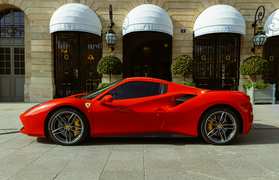
Bridging the gap between Bugatti’s historic EB110 and the modern Chiron architecture, the Centodieci delivers 1,600 horsepower from its quad-turbo 8-liter W16 engine. With a top speed capped at 236 miles per hour, it is a formidable track weapon disguised as a collector’s item.
Lamborghini Veneno: $8.3 million
With design cues pulled straight from aerospace engineering, the Lamborghini Veneno defies conventional styling norms. Only nine units were ever produced globally, allowing fortunate owners to harness a 6.5-liter V12 capable of launching the car up to 221 mph.
Maybach Exelero: $8 million
Originally commissioned by tire manufacturer Fulda to test high-performance compounds, the Maybach Exelero is a one-off heavy-hitting coupe. Powered by a twin-turbo V12 developing 700 horsepower, its track trials proved that massive luxury and extreme speed could coexist seamlessly.
Bugatti Divo: $5.7 million
Limited to just 40 units worldwide—all sold exclusively to existing Bugatti Chiron owners—the Divo shares the iconic 1,500-hp W16 engine but trades top-speed optimization for razor-sharp cornering agility and aggressive aerodynamic styling.
Koenigsegg CCXR Trevita: $4.8 million
Coated in a proprietary diamond-weave carbon fiber that makes the body sparkle like millions of diamonds under sunlight, this Swedish hypercar weighs a mere 1.4 tons. It rockets from 0 to 124 mph in just 8.75 seconds, leaving many mainstream supercars in the dust.
Aspark Owl: $3.3 million
Representing the electric vehicle revolution, the Japanese-built Aspark Owl stands out as the world’s most expensive and fastest-accelerating EV. Generating blistering power from four electric motors, it hits 0-60 mph in a record-shattering 1.69 seconds while sitting at a mere 39 inches tall.
What This Means for You
You might look at a $26 million Rolls-Royce and wonder how any of this applies to everyday financial planning, home loans, or wealth generation. In my advisory practice, I often remind clients that the ultra-luxury asset market serves as a psychological bellwether for the broader economy. When hyper-wealthy buyers aggressively park millions in rare vehicles, real estate, and alternative assets, it signals strong liquidity at the top.
However, translating this mindset to personal finance requires discipline. Whether you are shopping for competitive mortgage rates, evaluating real estate investments, or securing comprehensive insurance policies for high-value assets, treating your capital like a scarce resource is essential.
Should You Buy, Wait, or Invest?
If you are evaluating major capital deployment right now—such as purchasing residential property, refinancing existing home loans, or diversifying into tangible assets—timing and pricing are critical.
Buy Now If: You have secured stable financing, found a property or asset below market value, and plan to hold it long-term. Waiting out a fluctuating market often costs more in missed opportunities than entering strategically.
Wait If: Your debt-to-income ratio is stretched, or you are relying on volatile short-term gains to service high interest rates.
Invest Wisely: Look beyond traditional savings accounts. Just as hypercar collectors focus on coach-built, limited-run models that appreciate, everyday investors should target assets with inherent utility and strong historical resilience.
Best Financial Strategies Right Now (2026)

Navigating today’s economic climate demands a proactive posture. Here are the strategies I recommend to my high-net-worth and aspiring private clients:
Optimize Your Debt: If you are holding high-interest consumer debt, prioritize refinancing or consolidation immediately. Lock in predictable fixed rates before macroeconomic shifts dictate otherwise.
Diversify Into Tangible Assets: While hypercars aren’t practical for everyone, alternative investments—such as commercial real estate, fine art, or rare collectibles—provide a strong hedge against inflation.
Leverage Professional Advisory: Do not navigate complex mortgage structures, refinancing options, or portfolio adjustments alone. Working with trusted financial advisors ensures you secure the best options tailored to your long-term goals.
Cost Breakdown / Pricing Impact
When acquiring high-value assets—whether a multi-million-dollar hypercar or a luxury coastal estate—the purchase price is only the baseline. Buyers must account for total cost of ownership:
Acquisition Cost: The sticker price or winning auction bid.
Financing & Interest: Utilizing structured home loans or asset-backed lending rather than liquidating cash reserves preserves working capital.
Maintenance & Insurance: Specialized insurance policies for rare assets can run into tens of thousands annually. Neglecting this line item introduces catastrophic financial exposure.
Storage & Logistics: Climate-controlled facilities, secure transport, and routine mechanical maintenance protect the underlying asset value.
Mistakes to Avoid That Could Cost You Money
Over the past decade, I have watched prospective buyers make costly, emotional errors. Avoid these pitfalls:
Failing to Compare Lenders: Accepting the first mortgage rate or loan offer without shopping around can cost you hundreds of thousands over the life of the loan.
Overleveraging: Purchasing an asset purely for status while ignoring cash flow realities often leads to forced liquidation during market downturns.
Ignoring Due Diligence: Skipping professional appraisals, mechanical inspections, or legal reviews on high-ticket purchases is a recipe for financial disaster.
Case Study: The Two Approaches to Asset Acquisition
To put this into perspective, consider two hypothetical buyers I advised:
Buyer A fell in love with a limited-edition supercar without checking maintenance schedules, insurance costs, or financing terms. He financed the purchase impulsively with a short-term, high-interest commercial loan. When liquidity tightened, he was forced to sell the vehicle at a heavy loss within 18 months, dropping $300,000 in equity.
Buyer B took a methodical approach. She targeted a rare, appreciating automotive asset alongside a stable real estate investment. She compared multiple home loans and insurance providers, locked in favorable financing, and structured her cash flow so the assets could appreciate comfortably without straining her primary liquidity. Three years later, her portfolio yielded a net 22% return.
The lesson is simple: emotion drives desire, but discipline protects wealth.

Whether you are looking to secure competitive home loans, explore lucrative real estate investments, or simply compare your financial options for the year ahead, taking a structured, calculated approach is your best defense against market uncertainty. Ready to take the next step toward optimizing your financial portfolio or exploring exclusive vehicle solutions? Explore your best options and connect with industry specialists today to start building your future.