
The True Cost of Elite Engineering: Analyzing the Most Expensive Cars in the World in 2026
Who hasn’t fantasized about slipping behind the wheel of an absolute engineering masterpiece? Reserved exclusively for the ultra-wealthy elite, the most expensive cars in the world command global attention with their breathtaking designs, ferocious engines, and staggering horsepower. In my decade-long journey advising high-net-worth clients on alternative asset allocation—including rare automotive investments—I’ve watched these mechanical works of art transform from mere playthings into serious wealth-preservation vehicles. Powerful, seductive, and exceptionally rare, these elite machines make us dream, but they also demand a hard look at modern pricing, financing structures, and the broader real estate investment parallels of luxury liquidity.
Back in 2018, our tracking of the top 10 most expensive cars in the world totaled a combined $28.5 million. By 2022, that cumulative figure skyrocketed to a jaw-dropping $114.6 million. Entering 2026, valuations have climbed even higher due to constrained production numbers and soaring demand for bespoke coachbuilding. While most of us aren’t writing eight-figure checks on a whim, understanding this upper echelon of the market offers fascinating insights into asset appreciation, liquidity management, and high-end consumer trends. Let’s examine the 10 most expensive supercars driving the market this year.
The Top 10 Most Expensive Cars in 2026
Rolls-Royce Boat Tail
Bugatti La Voiture Noire
Pagani Zonda HP Barchetta
Rolls-Royce Sweptail
Bugatti Centodieci
Lamborghini Veneno
Maybach Exelero
Bugatti Divo
Koenigsegg CCXR Trevita
Aspark Owl
Rolls-Royce Boat Tail: $26.2 million
The Rolls-Royce Boat Tail firmly holds its crown as the most expensive new car ever built. Stretching 18.7 feet long, this maritime-inspired convertible blends vintage aesthetics with ultra-modern coachbuilding. Powered by a twin-turbo 6.75-liter V12 pushing 563 horsepower through an 8-speed automatic transmission, this “rolling yacht” has been produced just three times.
Bugatti La Voiture Noire: $18.1 million
Representing the pinnacle of French automotive achievement, this road-legal one-off draws inspiration from the legendary Bugatti 57 SC Atlantic. Beneath its carbon-fiber skin lies an 8-liter, 16-cylinder hand-assembled engine outputting a monstrous 1,500 horsepower.
Pagani Zonda HP Barchetta: $17.9 million
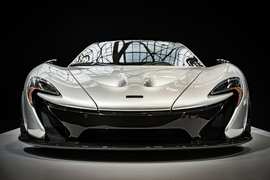
Horacio Pagani designed this ultra-exclusive roadster as a personal tribute to his own automotive philosophy, alongside just two other builds for private collectors. It remains an elusive masterpiece, with much of its precise technical data kept under wraps.
Rolls-Royce Sweptail: $13.2 million
As the automotive equivalent of haute couture, the Sweptail is a bespoke commission that showcases the absolute zenith of personalization. Beneath its sweeping glass roof and classic silhouette sits a responsive V12 engine churning out 453 horsepower.
Bugatti Centodieci: $9.1 million
Paying homage to the iconic EB110 while utilizing a Bugatti Chiron architecture, the Centodieci delivers 1,600 horsepower from its 8-liter W16 engine, topping out at an astonishing 236 miles per hour.
Lamborghini Veneno: $8.3 million
With aeronautics-inspired styling that looks plucked straight from science fiction, the Veneno production run was limited to just nine units worldwide. Its 6.5-liter V12 rockets the car up to 221 mph.
Maybach Exelero: $8 million
Originally commissioned by tire manufacturer Fulda to test high-performance compounds, this one-off coupe utilizes a 5.9-liter twin-turbo V12 producing 700 horsepower, proving that industrial testing can result in breathtaking design.
Bugatti Divo: $5.7 million
Limited to 40 units globally—each sold exclusively to existing Bugatti Chiron owners—the Divo shares the iconic 1,500-hp W16 powerplant but features a heavily reworked, track-focused aerodynamic profile.
Koenigsegg CCXR Trevita: $4.8 million
Celebrated for its proprietary diamond-weave carbon fiber bodywork that sparkles like millions of diamonds under sunlight, this Swedish featherweight achieves 0 to 124 mph in a blistering 8.75 seconds.
Aspark Owl: $3.3 million
As the world’s fastest-accelerating electric hypercar, the Japanese-engineered Aspark Owl utilizes four high-output electric motors to launch from 0 to 60 mph in a record-shattering 1.69 seconds, all while standing a remarkably low 39 inches tall.
Cost Breakdown / Pricing Impact (if applicable)
When analyzing the financial ecosystem surrounding these vehicles, the purchase price is merely the entry fee. Unlike standard depreciating assets, ultra-limited hypercars often operate under strict manufacturer covenants. For instance, buying a $10M+ vehicle frequently requires maintaining a portfolio of previous models, paying hundreds of thousands annually in specialized insurance, climate-controlled storage, and mandatory factory maintenance. Furthermore, transaction costs—including import duties, luxury taxes, and secure transport logistics—frequently add 15% to 20% to the initial acquisition cost.
What This Means for You

You might be wondering how an eight-figure hypercar relates to your personal portfolio. In my experience advising affluent clients, the psychology of luxury buying mirrors sound wealth-building principles. Whether you are evaluating mortgage rates for a primary residence, exploring home loans for a real estate investment, or considering strategic refinancing to free up capital, asset quality and liquidity are paramount. Just as a Bugatti holds its value through extreme scarcity, your personal financial moves must focus on high-yield, stable assets that protect you against inflation.
Should You Buy, Wait, or Rent/Invest?
If you have liquid capital sitting on the sidelines, the decision depends entirely on your risk tolerance and timeline.
Buy if you are securing tangible assets with proven historical appreciation, prime real estate, or cash-flowing business ventures.
Wait if you are attempting to time volatile markets like commercial real estate or speculative cryptocurrencies without professional guidance.
Rent or Invest smartly by leveraging liquidity rather than tying up all your capital in depreciating consumer goods. If you need temporary access to elite vehicles for business meetings or upscale travel, utilizing premium car rental services like SIXT allows you to experience top-tier luxury without the crushing depreciation and maintenance overhead of ownership.
Best Financial Strategies Right Now (2026)
Navigating the economic landscape of 2026 requires discipline. Here are the core strategies I recommend to my private wealth clients:
Optimize Your Debt: With fluctuating mortgage rates, actively monitor refinancing opportunities to lower your monthly debt service and improve cash flow.
Diversify Beyond Traditional Equities: Allocate a portion of your portfolio toward alternative investments, such as commercial real estate, private equity, or tangible collectibles with verified historical demand.
Maintain an Emergency Liquidity Buffer: Never tie up 100% of your net worth in illiquid assets, regardless of how attractive the short-term appreciation looks.
Mistakes to Avoid That Could Cost You Money
Over the last ten years, I’ve seen many aspiring investors make critical errors that drained their capital:
Failing to Calculate Total Cost of Ownership: Buying a high-end asset without factoring in insurance, maintenance, taxes, and storage fees.
Over-Leveraging on Speculative Assets: Taking on high-interest home loans or short-term debt to fund lifestyle purchases instead of appreciating assets.
Ignoring Market Timing and Liquidity Risks: Locking cash into assets that cannot be quickly liquidated during an economic downturn.
Case Study: The Two Approaches to Asset Allocation
Consider two high-income professionals in 2024. Buyer A decided to sink $500,000 in cash into a highly speculative, depreciating luxury vehicle and took on a high-interest personal loan to cover the gap. By 2026, due to market corrections and high maintenance costs, that vehicle lost 35% of its value, and the carrying costs drained his monthly liquidity.
Meanwhile, Buyer B used a disciplined approach: she invested that $500,000 into a diversified real estate portfolio utilizing favorable home loans and fixed-rate mortgage structures, while renting luxury cars through SIXT for special occasions. By 2026, Buyer B’s real estate assets appreciated by 18%, generating steady passive income while preserving her principal capital. The lesson is clear: separate your lifestyle indulgences from your wealth-building machinery.
Conclusion
Whether you are analyzing the stratospheric valuations of the world’s most expensive supercars or mapping out your next major financial milestone, informed decision-making is your best asset. If you are planning your next business trip or luxury getaway, explore the premium options available through SIXT to elevate your travel experience. To take the next step in optimizing your finances or securing your next high-end rental, compare your options, check the latest rates, and book your ideal solution today.