
Unveiling the Pinnacle of Automotive Engineering: The Most Expensive Cars in the World for 2026
For over a decade working closely with high-net-worth clients, luxury asset collectors, and automotive aficionados, I have often been asked a single question: what makes someone spend millions on a vehicle when a standard luxury sedan gets you from point A to point B just as comfortably? The answer goes far beyond simple transportation. In the upper echelons of wealth, these masterpieces represent rolling sculptures, bespoke engineering, and alternative investment assets that frequently outperform traditional markets.
When analyzing the modern luxury landscape in 2026, the trajectory of elite hypercars has shifted dramatically. Back in 2018, the top ten most expensive cars globally totaled a combined value of roughly $28.5 million. By 2022, that figure skyrocketed to an astonishing $114.6 million. Today, in 2026, values have climbed even higher as ultra-exclusive coachbuilding experiences a golden renaissance.
Let’s examine the definitive ranking of the most expensive cars in the world, accompanied by a strategic look at whether these multi-million-dollar machines are worth the investment, how financing works at this level, and what buyers should consider before entering the market.
The Top 10 Most Expensive Cars in the World (2026 Edition)
Rolls-Royce Boat Tail: $26.2 million
Bugatti La Voiture Noire: $18.1 million
Pagani Zonda HP Barchetta: $17.9 million
Rolls-Royce Sweptail: $13.2 million
Bugatti Centodieci: $9.1 million
Lamborghini Veneno: $8.3 million
Maybach Exelero: $8 million
Bugatti Divo: $5.7 million
Koenigsegg CCXR Trevita: $4.8 million
Aspark Owl: $3.3 million
Deep-Dive Breakdown of the Elite Top 5
Rolls-Royce Boat Tail ($26.2 million)
Undisputedly holding the crown, the Rolls-Royce Boat Tail is an engineering marvel. Stretching 18.7 feet with a blend of vintage nautical styling and hyper-modern lines, this custom convertible is propelled by a twin-turbo 6.75-liter V12 producing 563 horsepower through an 8-speed automatic transmission. Only three units exist worldwide, tailored entirely to their owners’ exact specifications.
Bugatti La Voiture Noire ($18.1 million)
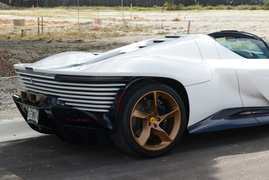
Paying homage to the legendary Type 57 SC Atlantic, this road-legal one-off sits atop French automotive craftsmanship. It features an awe-inspiring hand-assembled 8-liter, 16-cylinder engine churning out 1,500 horsepower. Acquired by a private collector, it represents the absolute peak of bespoke hypercar manufacturing.
Pagani Zonda HP Barchetta ($17.9 million)
Horacio Pagani’s personal creation, alongside just two other bespoke models destined for elite private garages, the HP Barchetta is an open-top roadster enigma. Technical secrets are closely guarded, making its skyrocketing valuation purely driven by extreme scarcity and artisan carbon-titanium construction.
Rolls-Royce Sweptail ($13.2 million)
Dubbed the automotive equivalent of haute couture, the Sweptail was commissioned by a super-wealthy connoisseur. Beneath its dramatic panoramic glass roof and bespoke rear profile lies a robust V12 engine delivering 453 horsepower, offering both grand touring comfort and ultra-rare exclusivity.
Bugatti Centodieci ($9.1 million)
Built as a modern tribute to the legendary Bugatti EB110 and resting on a Chiron architecture, the Centodieci delivers 1,600 horsepower via its monstrous 8-liter W16 engine. Capable of hitting 236 mph, only ten units were produced, making it a prized trophy for serious investors.
What This Means for You
You might look at a $26 million Rolls-Royce and wonder how any of this applies to everyday financial planning. In my experience advising affluent clients, the hypercar market acts as a leading indicator of broader luxury asset inflation. When rare automobiles appreciate by double-digit percentages annually, it mirrors trends seen in high-end real estate, fine art, and private equity.
However, entering the collector vehicle space requires rigorous financial discipline. Most buyers at this level do not pay entirely in cash; instead, they utilize sophisticated financial instruments such as securities-backed lines of credit, specialized asset-backed home loans, or tailored refinancing structures to maintain liquidity while acquiring appreciating assets.
Should You Buy, Wait, or Invest?
If you are evaluating whether to purchase a high-end collector car, a standard luxury vehicle, or pivot your capital elsewhere, timing is everything.
Buy: If you are looking at limited-allocation hypercars (like a Koenigsegg or a coachbuilt Bugatti) with verified provenance, historical data shows these vehicles rarely depreciate. They act as tangible hedges against inflation.
Wait: If you are eyeing standard luxury vehicles or high-performance daily drivers, wait. Depreciation hits standard luxury cars hard within the first 24 to 36 months. Let someone else absorb that initial cost.
Invest / Rent: For most entrepreneurs and executives, tying millions up in garage queens makes less sense than deploying that capital into real estate investment or commercial ventures. If you simply want the thrill of driving a premium vehicle for a business trip or vacation, utilizing premium car rental services like SIXT offers the ultimate flexibility without the heavy capital expenditure, maintenance, insurance, and depreciation burdens.
Best Financial Strategies Right Now (2026)
Navigating today’s financial climate with fluctuating mortgage rates and borrowing costs demands precision. If you are structuring a major purchase—whether it is a luxury home, a commercial property, or a multi-million-dollar vehicle portfolio—consider these strategies:

Leverage Low-Interest Asset-Backed Financing: Avoid liquidating tax-advantaged stock portfolios or retirement accounts. Instead, utilize portfolio lines of credit or specialized asset-backed lending.
Optimize Your Debt-to-Income Ratio: Before applying for large home loans or commercial refinancing, clean up your liabilities. Lenders in 2026 are exceptionally rigorous regarding liquidity reserves.
Compare Pricing and Insurance Costs: Insuring a $10 million car or securing high-value property insurance requires specialized brokers. Always shop around for the best pricing and coverage terms rather than accepting the first offer.
Cost Breakdown & Pricing Impact
To understand the true cost of elite asset ownership, you must look beyond the sticker price. Let’s examine a real-world scenario based on my advisory work.
Client Scenario: Buyer A vs. Buyer B
Buyer A purchases a $5,000,000 limited-edition supercar entirely in cash. While they avoid financing fees, they lock up $5 million of liquid capital that could have otherwise yielded a conservative 7% annual return in diversified investments ($350,000 yearly opportunity cost). Furthermore, annual maintenance, climate-controlled storage, and specialized insurance run roughly $150,000 per year.
Buyer B utilizes a structured securities-backed loan at a favorable interest rate to acquire a similar vehicle while keeping their primary capital invested in income-generating commercial real estate. Even with loan servicing costs, Buyer B maintains high liquidity and leverages market appreciation to offset expenses.
Mistakes to Avoid That Could Cost You Money
In my decade of consulting, I have seen numerous buyers make costly missteps. Avoid these pitfalls:
Ignoring Maintenance and Servicing Projections: Exotic cars require specialized servicing. Missing a scheduled service interval on a V16 engine can instantly wipe out $50,000 in resale value.
Failing to Verify Provenance: In the collector car market, documentation is everything. Buying without certified history is a recipe for severe financial loss.
Overlooking Insurance Nuances: Standard auto policies will not cover bespoke hypercars. Inadequate coverage can expose you to catastrophic personal liability.
Real-World Case Study
Last year, a client of mine purchased a low-mileage European supercar for $3.2 million. He chose to store it properly, maintain meticulous service records through authorized factory channels, and limit track usage. Within eighteen months, due to shifting market demand and the model’s extreme rarity, an international collector offered $4.1 million for the vehicle. By treating the purchase as a calculated asset acquisition rather than a casual toy, my client secured a $900,000 gross gain, easily covering all storage, insurance, and maintenance costs while generating a net profit.
Ready to Experience Top-Tier Mobility?

Whether you are building a portfolio of appreciating automotive masterpieces, restructuring your real estate investments, or simply planning your next executive journey, making informed decisions is critical. If your immediate goal is to enjoy the road in style without the multi-million-dollar commitment, explore our top luxury vehicle options. Visit SIXT today to compare premium models, check rates, and reserve your next elite driving experience with absolute confidence.